
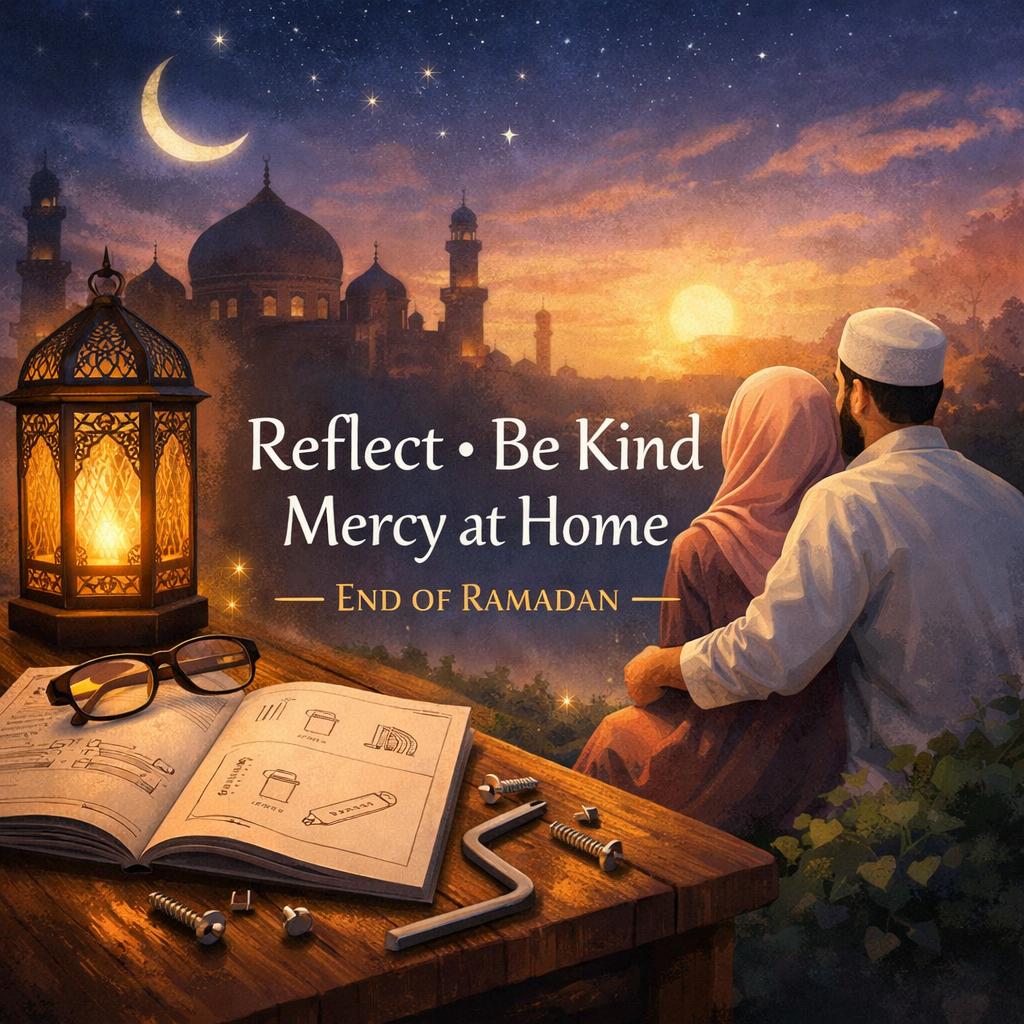
We for You | Daily Reflection | by Maryam ❤️
Salam Alaikum dear brothers and sisters. I hope you are all doing well today. A warm welcome as well to the new members who recently joined our group.
Thank you for your patience and for waiting for this reflection. During Ramadan I usually try to keep messages to a minimum, because this blessed month is a time for personal reflection, connection with Allah SWT, and quiet moments with ourselves. Sometimes fewer messages allow us to reflect more deeply without distractions.
As we approach the end of Ramadan and the days just before Eid, I wanted to share this reflection.
Think about the last time you bought a new gadget or tried to assemble a piece of furniture. 🪑
Most of us open the box and start experimenting right away. Only when something stops working do we finally look for the instructions.
Interestingly, studies about human behavior show that many people rarely read manuals before using something new. Research in usability and human-computer interaction suggests that users often consult instructions only after something goes wrong. Some studies indicate that manuals are read only about 25% of the time when people start using a new product. A UK survey of over 2,000 adults even found that about 19% rarely read instruction manuals for new gadgets.
Researchers describe this habit as the “active user paradox” -the tendency to prefer trial-and-error learning instead of reading instructions first. Psychologists sometimes call it “instruction avoidance,” the belief that we will understand everything without guidance.
But perhaps the real lesson is not about instructions.
When we buy a device or assemble furniture, we accept that it was designed by someone who understands how it works. The manual exists because the creator understands the design better than the user.
In life, relationships between a man and a woman are also something deeply designed. They are not simple. They require patience, understanding, mercy, and effort from both sides.
But unlike furniture or machines, we do not need to assemble or rebuild a human being. Every person is part of Allah’s creation, and learning to understand one another takes patience and mercy. Rather than trying to reshape each other, we are invited to learn how to care for one another, respect one another, and grow together.
And the truth is that we are all learning. It takes time to understand yourself, and even more time to truly understand another person. Growth in relationships rarely happens overnight.
In Islam, guidance was given to us before things break. The Qur’an reminds us that spouses were created so that we may find tranquility, love, and mercy with one another.
Allah SWT beautifully describes the relationship between spouses:
“They are garments for you and you are garments for them.”
(Qur’an 2:187)
Just as garments protect us, comfort us, and stay closest to us, spouses are meant to protect, support, and bring peace to one another.
Many of us carry struggles that others may never see. Some things cannot be solved in a single night, but we can always choose patience, kindness, and understanding.
Take a moment to reflect and make sincere dua. And for the couples among us -*be gentle and kind to your spouse, no matter what stage your relationship is in.*
Sometimes a small act of mercy, a kind word, or a moment of patience can change the direction of a relationship.
Before Eid arrives, we can reflect not only on our worship, but also on the kindness we show to those closest to us.
May Allah SWT accept our fasting, our prayers, and our efforts during this blessed month. May He bring peace to our hearts and barakah to our homes. 🤲🏻
💚 Kindly share with credit | © We for You