
We for You | Daily Reflection | *by Maryam* ❤️
Salam alaikum dear Brothers and Sisters, I hope you are all feeling well today, and a warm welcome to our new members, we’re truly glad you’re here.
I always say: if we want to understand something, we must be willing to learn about it sincerely and without assumptions.
As promised, I’d like to return to a question that touches many hearts and homes:
What does obedience mean in Islam, and what does a wife’s obedience truly involve?
Is it cooking, cleaning, childcare or unquestioning compliance?
Sometimes this topic is linked to a well-known statement of the Prophet pbuh, where he said that if he were to order anyone to prostrate to another human being, he would have ordered a wife to prostrate to her husband.
So what does this actually mean and does it define obedience?
First, it is important to be very clear: no human being may be prostrated to in Islam. Prostration is an act of worship reserved for Allah SWT alone. The Prophet pbuh did not command prostration, nor did he permit it. The statement was hypothetical, not a legal instruction. Islamic scholars explain that this wording was used to emphasise the seriousness of responsibility, respect, and mutual rights within marriage, not to establish dominance, worship, or absolute authority. It highlights the weight of responsibility, not blind submission. If it were meant literally, it would contradict the core Islamic principle that worship belongs only to Allah SWT and Islam does not contradict itself.
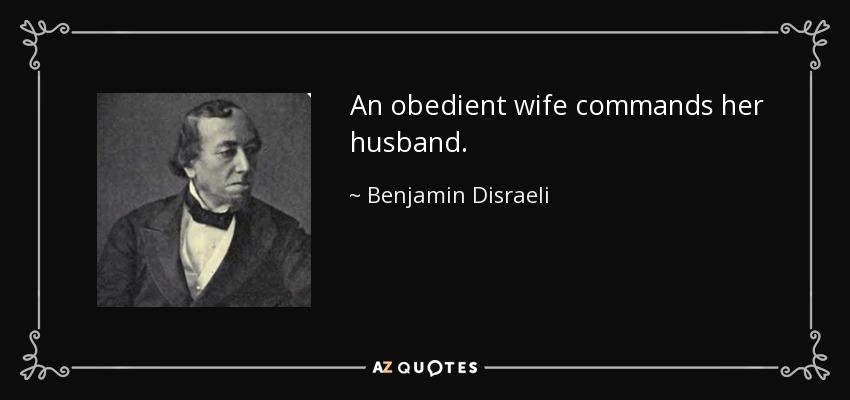
Interestingly, even outside of Islam, thinkers observed that obedience rooted in trust, not fear, creates influence rather than weakness. The 19th-century statesman Benjamin Disraeli once remarked: “An obedient wife commands her husband.”
He was not speaking about submission or hierarchy, but about a human reality: where there is respect, goodwill, and emotional safety, influence flows naturally.
In general usage, the word OBEDIENCE means compliance with an order or authority.
Islam, however, gives this word clarity, limits, and mercy. In Islam, a *wife’s obedience means cooperation and respect within marriage in what is *halal, reasonable, and just, and always within a woman’s physical, emotional, and psychological capacity.*🚨
It is not control, fear, self-erasure, or submission to ego or abuse.
Islam sets a clear and universal boundary, taught by the Prophet pbuh:
There is no obedience to the created in disobedience to the Creator Musnad Ahmad (Hadith no. 1098) Ṣaḥiḥ al-Jami (no. 7520)
This principle applies to everyone husbands and wives, parents and children, leaders and followers. No human authority overrides obedience to Allah SWT.
When this principle is understood properly, much confusion disappears.
Obedience in marriage is conditional, not absolute.
A request is only valid when it is:
1. halal
2. non-harmful,
3. just,
4. within capacity.🚨
If even one of these is missing, obedience is not required.
Marriage calls for conscious partnership from both sides. Before asking for obedience, I encourage husbands to pause and reflect honestly on these 4 conditions. At the same time, I encourage wives to reflect honestly especially about intention, effort, and personal capacity.
*When both spouses act sincerely and avoid twisting matters in their own favour, many daily misunderstandings are prevented and trust grows naturally.*🚨
Obedience in Islam includes lawful marital cooperation, loyalty and trust, protecting privacy and dignity, and reasonable, non-humiliating requests within ability. Islam does not define obedience as servitude. Likewise, it does not include sin or harm, emotional, physical, or financial abuse, religious manipulation, forced isolation, or ignoring illness, trauma, or real limits. The Prophet pbuh never commanded harm or humiliation.
Not cooking or cleaning is not disobedience. 🚨
Household work in Islam is cooperation, not an unconditional obligation. At the same time, when a woman cooks, cleans, or maintains the home, this is often done with intention and faith. When she places Bismillah in her heart, relies and expects from Allah SWT while nurturing the home, she is rewarded for that effort. For many women, caring for the home is deeply connected to worship, intention, and inner meaning.
Because of this, the home often holds a special place in a woman’s heart. *When the house is not maintained, the first question should not be “Why are you not doing this?” but rather “How are you feeling?”*🚨
A depleted or exhausted woman will naturally struggle to give at home. This is not laziness, it is a signal. Often, what she needs first is rest, emotional safety, or space to replenish herself. When her energy is restored, she naturally turns again toward nurturing, organising, and creating goodness in the home.
Women’s energy fluctuates due to biology, health, and life circumstances, and each woman has a different capacity.
Very often spouses comparing each other to others: someones wife, someones husband, siblings even parents. I encourage to look at the person in front of you, not comparisons with others. At the same time, honesty matters, both spouses I encourage to communicate clearly about what they can and cannot do, without blame or avoidance.
Conscious spouses regularly ask themselves and each other: How am I feeling? How are you feeling? What can we change together? Sometimes *small adjustments make a big difference*- sharing tasks differently, using tools like diswasher or help when possible, agreeing on spending and household usage, creating personal space, or giving each other time to rest. *Many couples struggle not because of lack of love, but because of unspoken exhaustion and unspoken expectations on both sides.*🚨
*A woman is not merely expected to maintain a house- she is meant to create a home, first within herself.*❣️
When she feels supported and grounded, whatever she touches carries calm and warmth. At the same time, a home cannot thrive on one person’s energy alone. It is shaped by what both spouses bring- emotionally, spiritually, and practically.
A husband is qawwam, accountable before Allah SWT for leadership and care. A wife is entrusted with cooperation and trust. Neither role replaces the other. Leadership in Islam means responsibility, and cooperation means sincerity, both rooted in justice and mercy.
In the end, a wife’s obedience in Islam is cooperation in righteousness, not submission to oppression, just as a husband’s leadership is responsibility, not entitlement. Marriage in Islam is meant to be a space of tranquility, compassion, and mercy, where responsibility flows both ways and dignity is preserved for both.
May Allah SWT grant our homes sakinah, our hearts wisdom, and our words gentleness. May He help us see one another with mercy, speak with honesty, and act with justice. May He strengthen our marriages with balance, compassion, and mutual care, and protect us from turning responsibility into burden or love into pressure. Ameen.🤲🏻
💚Kindly share with credit | © We for You